
PRESS RELEASE - Japan Delivers Historic Blow to Religious Freedom
For Immediate Release
London — 4 March 2026
Japan Delivers Historic Blow to Religious Freedom: Family Federation Dissolved Without a Single Criminal Conviction
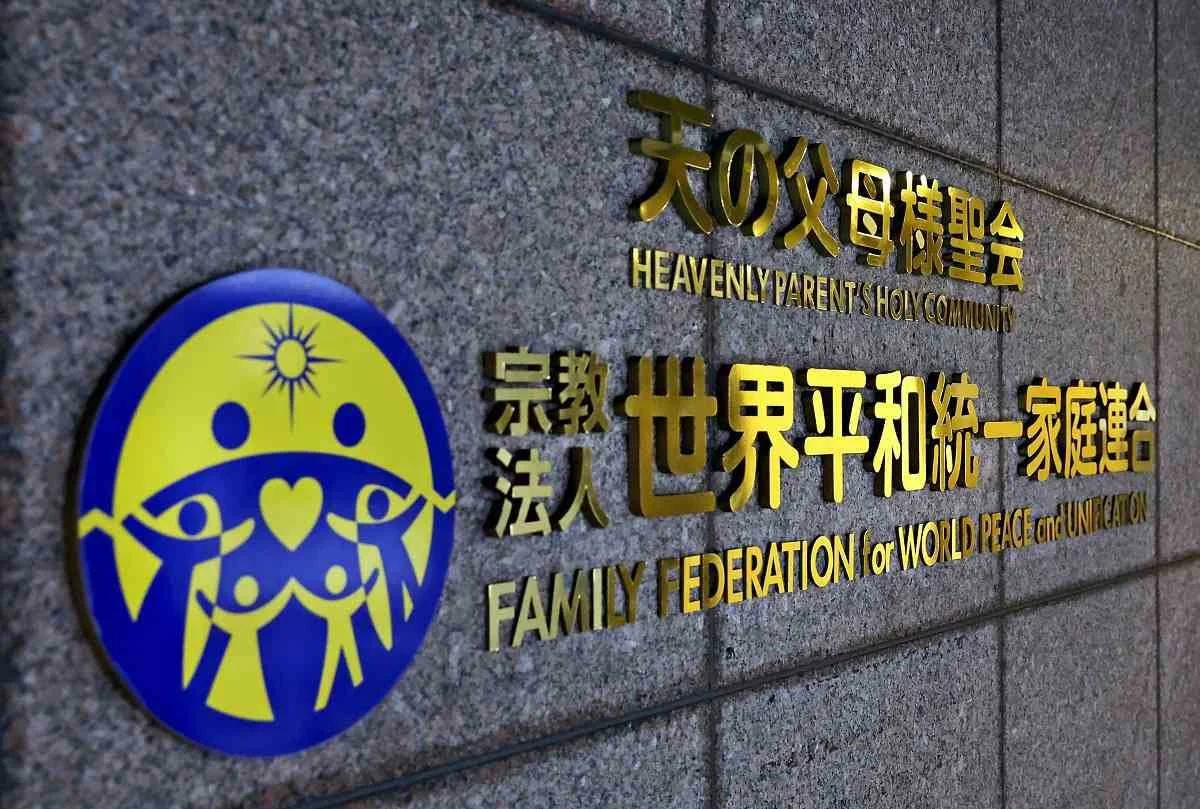
In a landmark — and deeply troubling — decision, the Tokyo High Court has today upheld the government's order to dissolve the Family Federation for World Peace and Unification (FFWPU) in Japan, formerly known as the Unification Church.
Effective immediately, the religious corporation loses its legal status under Japan’s Religious Corporations Act. Compulsory liquidation of its assets can now proceed.
This marks an unprecedented milestone in Japan’s postwar constitutional era: For the first time, a major religious organisation has been effectively erased as a legal entity, without any criminal conviction against the organisation itself.
This is no routine administrative action. It is the harshest sanction available under Japanese law, stripping a faith community of its institutional existence. In rule-of-law democracies, such an extreme measure demands an extraordinarily high threshold of evidence and justification. Many legal scholars, human rights advocates, and international observers argue that this threshold has not been met here.
No Crime Proven — Yet Institutional Death Imposed
The court found no criminal guilt on the part of the Family Federation. Dissolution rests instead on allegations of harm to an undefined “public welfare” and breaches of loosely defined “social norms” — standards far below those required for criminal liability.
This sets a dangerous precedent: a religious body can be dismantled administratively, based on civil claims spanning decades, without the rigorous proof a criminal trial demands.
The Shadow of Tragedy and Political Pressure
The issue exploded into public view after the 2022 assassination of former Prime Minister Shinzo Abe. The perpetrator, Tetsuya Yamagami, cited personal grievances tied to his family’s donations to the church. The court rightly held Yamagami solely responsible and imposed a life sentence. No evidence linked the religious organisation to the murder.
Yet the ensuing media storm and political backlash created intense pressure. Within months, the government launched dissolution proceedings — a sequence critics describe as reactive rather than strictly legal.
Investigative journalist Masumi Fukuda has produced groundbreaking reporting that challenges key elements of the dominant narrative, pointing to media bias, selective evidence, and the marginalisation of dissenting voices. Her work raises serious questions about whether full due process could prevail in such a polarised climate.
“We Have Committed No Crime”
FFWPU Japan President Masaichi Hori responded with resolve:
“We have not committed any crime as a religious corporation. Our members are sincere believers who practice their faith peacefully and strive to contribute positively to society. We deeply regret this extreme decision imposed without criminal conviction. We will continue to uphold our beliefs lawfully and peacefully, confident that truth and justice will ultimately prevail.”
Real People, Real Devastation
Beyond legal abstractions stand tens of thousands of ordinary Japanese citizens:
Families who pray and build lives together
Volunteers sustaining community service programs
Children whose faith shapes their values and sense of belonging
Dissolution threatens:
Government confiscation and forced liquidation of religious assets – properties, buildings, bank accounts
Closure of worship spaces, churches, church cemeteries and centres
Transfer of ownership to the government
Disruption — or outright end — of church-funded charitable, educational, and humanitarian work
Heightened financial hardship and social instability for members
Already, as a result of “trial by media,” hotels and other public facilities are refusing to rent space to us for our charitable activities.
Since 2022, believers have already endured escalating discrimination, social ostracism, and — in some heartbreaking cases — vicious bullying of children. This ruling risks entrenching and amplifying that suffering, turning abstract legal loss into lived human hardship.
A Precedent That Should Alarm Every Democracy
Japan stands as a model of stable constitutional democracy, with robust protections for freedom of religion under its Constitution and Article 18 of the International Covenant on Civil and Political Rights (ICCPR). These guarantees protect not only personal belief but the collective right of communities to organise, worship, and maintain legal existence.
When a religious group can be dissolved without criminal conviction — on grounds of vague “public welfare” claims — the precedent reverberates far beyond one organisation. It tests the resilience of minority rights in any democracy.
As Mahatma Gandhi powerfully reminded us, the true moral strength of a nation is revealed in how it treats its most vulnerable minorities.
The eyes of the world — and of history — are now on Japan’s democratic institutions. Will they uphold the highest standards of religious freedom and due process, or will this ruling mark the beginning of a troubling erosion?
For further information or interviews, contact:
Bogdan Pammer
FFWPU-UK Director
43 Lancaster Gate, London, W2 3NA
Phone: 07763644575
Email: comms@ffwpu.org.uk
Further Reading
Supplement to Press Release – The following clarifications are provided in response to widespread public commentary and media reporting concerning FFWPU-Japan and related matters by FFWPU-UK
The Unification Church Verdict: The New Martyrs of Japan by Massimo Introvigne